Skip to content

Postsecondary education and training options

Education after high school provides many benefits beyond achieving a fulfilling career. Your child will have opportunities to develop life skills, experience greater independence, meet new people, and explore their interests and the world around them.

Options to meet a variety of goals

There are many postsecondary education and training options you and your child can explore, including:

  • Adult basic education: Classes are often available free of charge to help students develop skills in areas such as reading, writing, math and computer proficiency.

  • Apprenticeship programs: Apprenticeships allow people to learn on the job. Wages increase as job-specific skills are mastered through both classroom and on-the-job training.

  • Certificate programs: Technical colleges, trade schools and workforce programs offer preparation for certification exams, which test skills or knowledge in specific competencies.

  • Community education: Explore lifelong learning options in a local community setting.

  • Degree programs: These programs include two-year associate degrees, four-year bachelor’s degrees, and graduate degrees (such as master’s degrees and PhDs). Community colleges can be strategic stepping stones, often providing smaller class sizes, lower costs and strong disability support services in a culturally familiar environment. The skills learned at a two-year college easily transfer to four-year universities or the workforce.

  • Inclusive higher education programs for people with intellectual disabilities: Some colleges offer postsecondary education programs for youth with developmental and intellectual disabilities.

  • Military opportunities: Military options include Air Force, Army, Coast Guard, National Guard, Navy, Marines and Space Force.

  • Postsecondary enrollment options (PSEO) and concurrent enrollment: These programs allow high school students to enroll in college courses at Minnesota colleges and universities and earn both high school and college credit. Participation is open to students in 10th, 11th and 12th grade, with specific eligibility criteria and participation limits for 10th graders.

Ways to explore postsecondary education options

Statement here about how you can help your child explore their goals and options for education and training after high school.

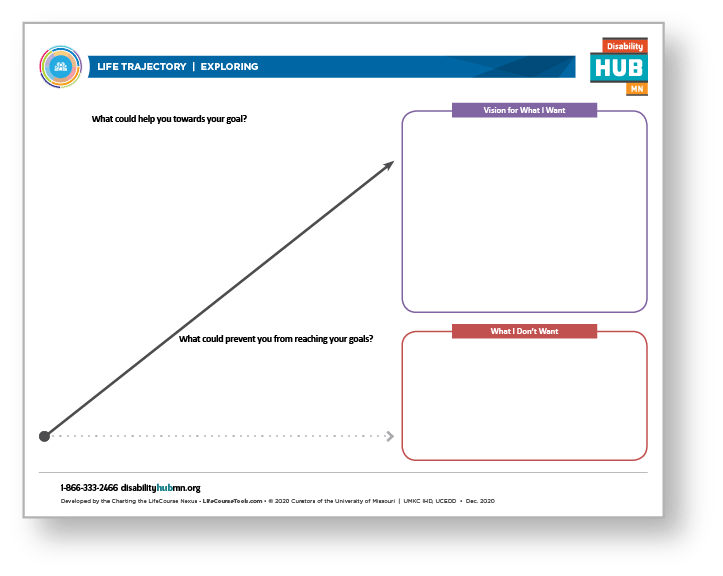
Use the Charting the LifeCourse life trajectory worksheet (PDF) to help your child talk about their hopes and dreams. Then, brainstorm ways that postsecondary education or training could help them move towards those dreams.

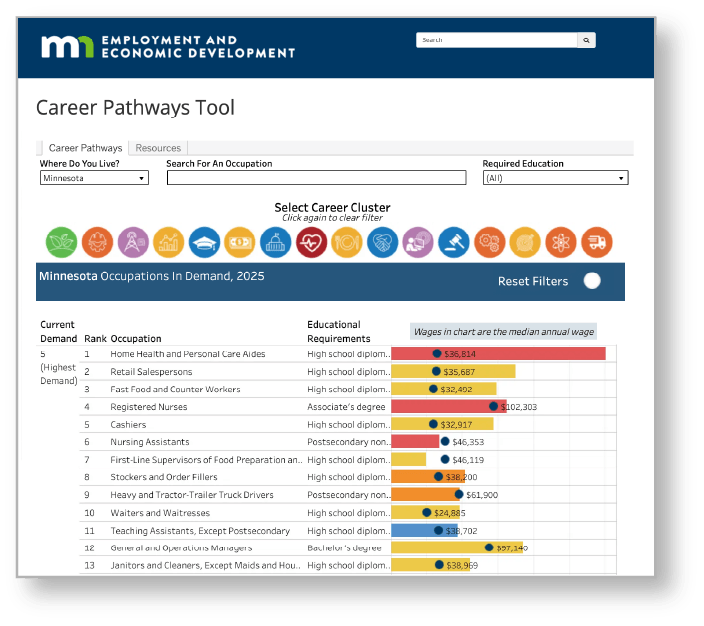
Encourage your child to try out the Minnesota Department of Employment and Economic Development's (DEED) Career Pathways Tool. This online database can help start career and postsecondary exploration with information about wages, current job demand, the number of people employed in various jobs, and the education and training typically required.

DEED's online Career Pathways Worksheet has questions, instructions and sample exercises to help students understand how to navigate and use the tool.

Explore

Research nearby community colleges, technical schools and adult education centers with your child. [What about colleges, universities, apprenticeship programs, etc? What about programs that are not nearby?]

Check out the Minnesota Department of Higher Education's MyHigherEd website and College Finder for more information.

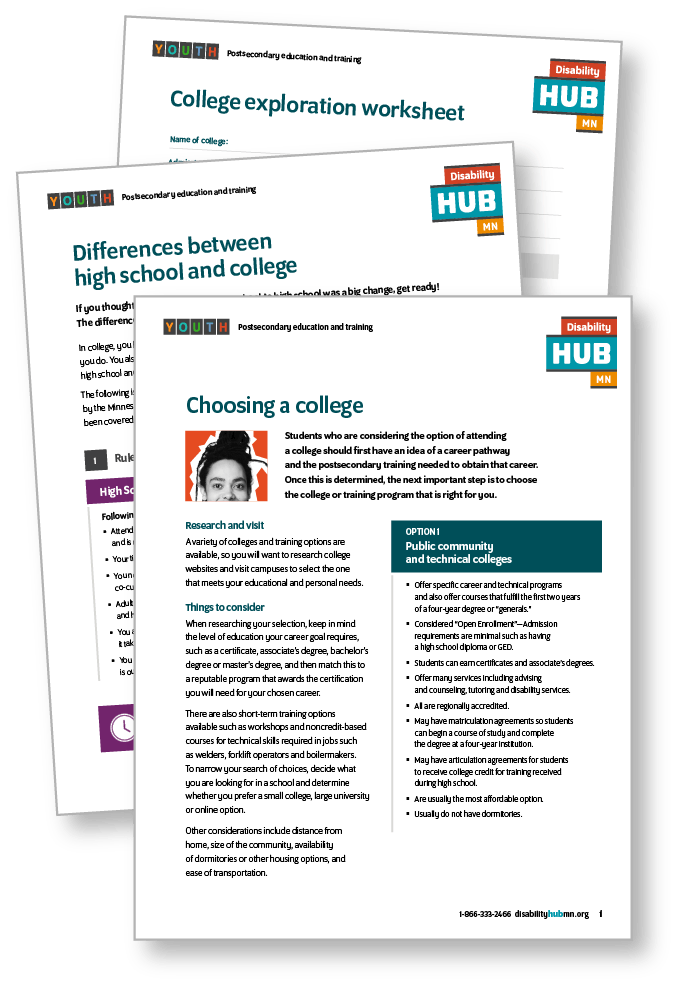
You can also explore resources from Disability Hub MN on choosing a college (PDF) and understanding the differences between high school and college (PDF).

Visit

Once your child has narrowed down postsecondary education or training programs that meet their needs, encourage a campus visit. This is an opportunity to determine if the program is a good fit.

  • Does the program meet their academic needs?

  • Does the campus feel comfortable?

  • Can they imagine themselves as part of the learning community?

The Hub's College exploration worksheet (PDF) can help your child gather and record information as they plan and compare various colleges and training programs.

Apply

Once your child has found some postsecondary education and training programs that might be a good fit, help them apply to those programs.

Many high schools in Minnesota participate in Direct Admissions Minnesota. At these schools, seniors who are on track to graduate will receive personalized communication from the Office of Higher Education that lists all participating Minnesota colleges and universities they are proactively admitted to based on a review that school staff conduct.

Connect with the counseling services at your child's school to learn more about postsecondary application and admissions processes.

[Note: we removed the Postsecondary Resource Guide (PDF) -- LND has a PDF file of this guide from previous YIT work, but it doesn't seem to be available online any more. Emailed Claire about the need to determine if it is still being used by MDE and MNSCU. Date within the PDF says 2014.]
Encourage your child to share their goals for life after high school with their support team. Make sure your child's team discusses and has a plan that includes goals for work, daily living and community life.

Hear what young adults have to say about postsecondary education and training

Watch this 4-minute video to hear what young adults say about their experiences participating in education and training after high school.

Postsecondary Education and Training

Chat, call or email the Hub.

At the Hub, there’s no such thing as a wrong question. We're here to help. Contact us Monday to Friday, 8:30 am to 5 pm.