Skip to content

Prepare for the transition to adult care

Help your child prepare for the transition from pediatric to adult care by encouraging them to understand, advocate and participate in their own care.

A key part of healthcare navigation means helping your child know how to find and use the right health services when they are needed. This includes understanding where to go for care, how to schedule appointments, how to use insurance, and how to communicate with providers. It also involves knowing and taking medications as prescribed and reporting any new symptoms. Helping your child learn these skills can build confidence and support their independence in managing their health care.

Privacy and consent

Once your child turns 18, they are legally an adult and responsible for their own health care. At that time, their health information and medical records will become their private information. You won't be automatically included in medical conversations, and providers will need your child's permission to share health and billing information with you.

Ways to support your child's transition to adult care

Summary statement here.

  • Encourage your child to make and cancel their own appointments.

  • Teach your child how to fill out forms or know who can help with forms.

  • Encourage your child to ask questions of providers and learn more about their health.

  • Explain where to go for questions about their health insurance plan.

It's important for your young adult to know and keep copies of their healthcare information, as well as keep easy access to their medical and dental insurance cards.

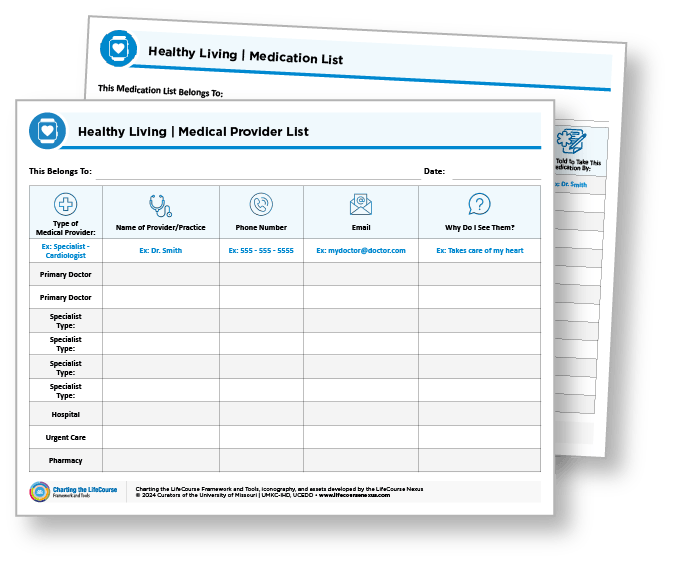
Health care list

A health care list can help your child keep track of their medical providers and specialists. It should include names of doctors, dentists, mental health providers, pharmacies and their contact information. Charting the LifeCourse's Medical Provider List offers a template to create this type of list.

Medication list

A medication list can help your child keep track of medications, scheduling, reasons, and more so that you are sure of the why, when, and who prescribed your medications. Charting the LifeCourse's Medication List can be a helpful resource to create this type of list.

Other health-related information

You can also use other Charting the LifeCourse Healthy Living tools with your child to have conversations, explore their vision, and plan experiences and supports to achieve a healthy life. These tools include the:

  • Integrated support star for healthy living

  • Trajectory for healthy living

  • My health care support needs

  • My health care support team

  • Today's health care visit

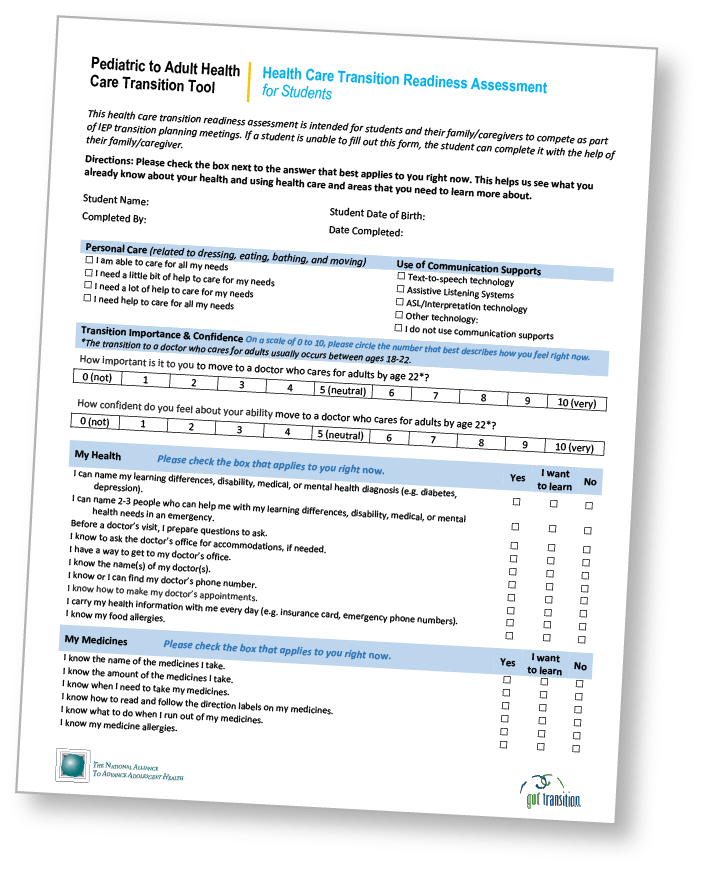
This Health Care Transition Readiness Assessment (PDF) questionnaire from GotTransition.org can help identify what your child already knows about their health and health care, and areas where more learning may be needed.

[LN Note: The assessment linked above is what is linked to from the YIT toolkit — this assessment says it's meant to compete as part of IEP transition planning meetings. GotTransition.org also promotes this Transition Readiness Assessment (PDF) directly for youth. They also have this online quiz.]

Chat, call or email the Hub.

At the Hub, there’s no such thing as a wrong question. We're here to help. Contact us Monday to Friday, 8:30 am to 5 pm.