Skip to content

Learn about financial aid options

College costs can feel overwhelming, but financial aid options exist specifically for students with disabilities. From federal grants and scholarships, to state programs and institutional support, funding sources can significantly reduce expenses.

Types of financial aid

The most common types of financial aid include:

  • Grants: Grants are like gifts and do not have to be paid back. They are considered need-based aid and are usually awarded to students with the fewest financial resources. Grants typically come from federal or state governments and are sent directly to the school.

  • Scholarships: Scholarships are awarded based on a student's academic or athletic achievement, cultural or religious background or special skills and talents. Scholarships are most often given to students by the institution they attend but many other organizations also offer scholarships.

  • Loans: Loans are funds that must be paid back with interest. They may be provided by the state or federal government or a private entity.

  • Work-study: Work-study programs are on- or off-campus jobs offered though a college's financial aid office.

Additional financial aid options and resources for paying for college include military education benefits, tuition reciprocity, student loan repayment programs, education tax benefits and more.

[Edited by LN to more closely match info on MN Office of Higher Education]

Ways to explore and apply for financial aid

You can help your child explore and apply for financial aid.

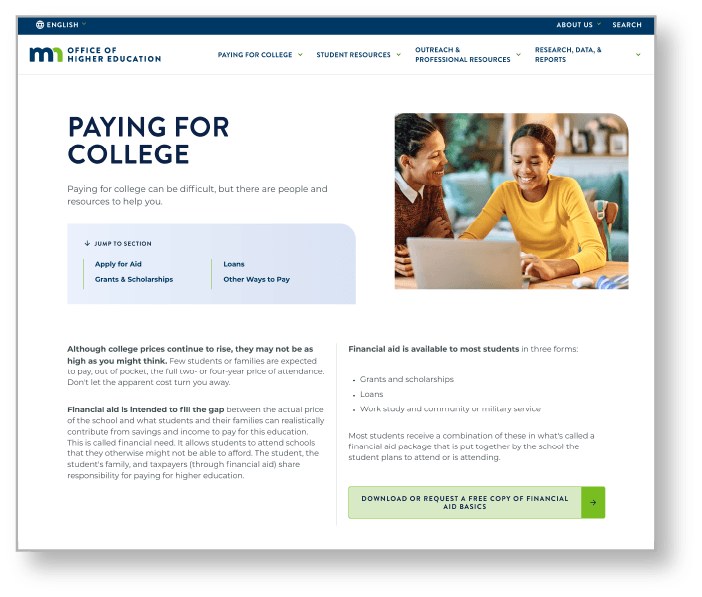
Paying for college from the Minnesota Office of Higher Education provides an introduction to financial aid, including information about:

  • Scholarships and grants, including the North Star Promise and Minnesota State Grant

  • Loans and repayment options

  • Other ways to pay

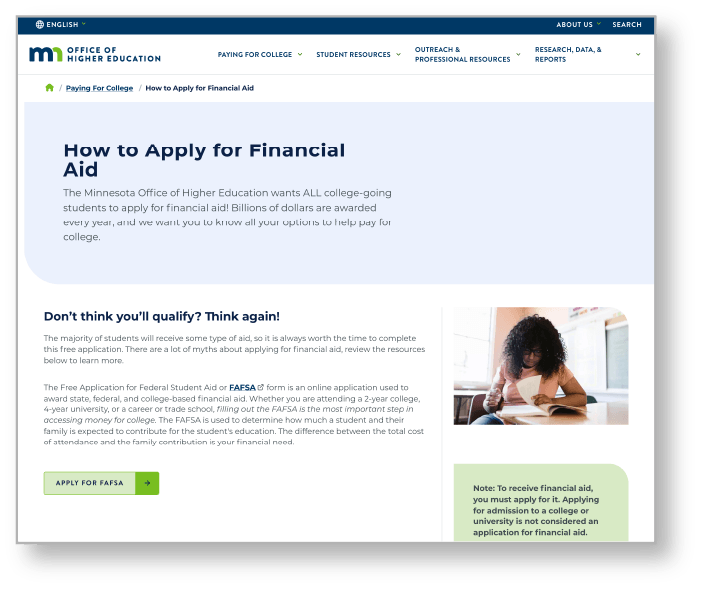
Applying for financial aid typically begins with the: 

Then, the student must complete a financial aid application at the chosen postsecondary education or training program. Once you and your child have filled out the FAFSA, connect with the financial aid office at the program or programs where they are thinking of applying to continue the financial aid process. [LN edited. As a parent who just went through a college financial aid process, I believe most institutions are just utilizing the FAFSA to gather financial aid information.]

For more information, check out the Minnesota Office of Higher Education's how to apply for financial aid webpage.

There are a number of ways to find additional aid, including:

[More to say about this topic? Local organizations a person/family may have connections to, like a bank, credit union, workplace or professional association, often offer scholarships too.]

Help your child research, complete applications and meet deadlines so they don't miss opportunities.

Chat, call or email the Hub.

At the Hub, there’s no such thing as a wrong question. We're here to help. Contact us Monday to Friday, 8:30 am to 5 pm.