Skip to content

Help your child stay safe while becoming more independent

Encouraging your child to be independent may feel risky, but it doesn’t have to be. Maintaining connections with family, friends and other close contacts can increase safety, while also giving them the support they need to grow.

It’s natural to have concerns

As your child becomes more independent, you may wonder if they will be OK in a work setting, on public transportation or around people who don’t know them well. You may have worries about their safety, decision-making abilities or how they will manage their money. While these concerns are valid, they shouldn't prevent your child from living a self-directed life.

As your child gains confidence, have open conversations about boundaries, self-advocacy and recognizing trustworthy relationships. Work together on practical strategies for navigating new environments— emphasizing that independence includes both freedom and responsibility.

It's natural to worry about your child's safety, but shielding young people from every risk can limit their opportunities. Instead, focus on helping your child develop the skills to assess and manage risks while supporting them to try new things and become more independent.

Ways to support your child in staying safe

Statement here about how you can help your child learn skills to stay safe.

Teaching your child essential safety skills can help them prepare for independent living, learn key life and safety skills.

This can include:

  • Carrying an ID card and emergency contacts

  • Sharing their plans and where they are when away from home

  • Knowing what to do in a fire or weather emergency

  • Understanding how to interact with law enforcement

  • Handling situations like being locked out of the house

  • Staying aware of surroundings in public places

  • Safely using kitchen tools and appliances

  • Understanding how to interact and stay safe online [LND added] 

  • Protecting personal identity and passwords

  • Recognizing and reporting abuse or neglect

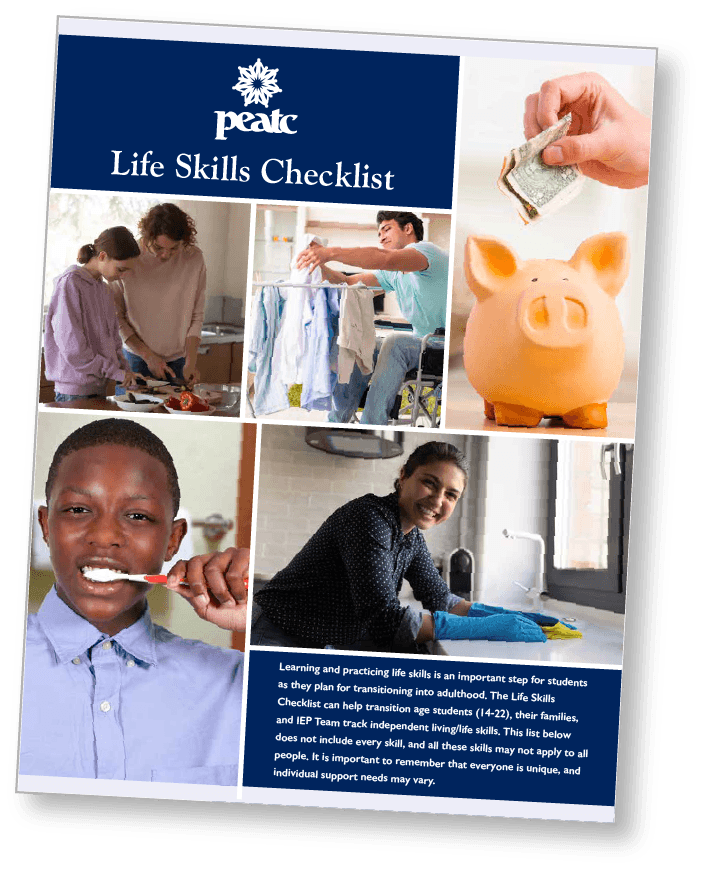
Allow your child to take on new challenges—even if mistakes happen. Trying, learning and problem solving are important steps towards independence. The Parent Educational Advocacy Training Center (PEATC) offers a life skills checklist (PDF) for parents, youth and their IEP teams to track independent life skills.

[Add thumbnail of life skills checklist once image box is working.]

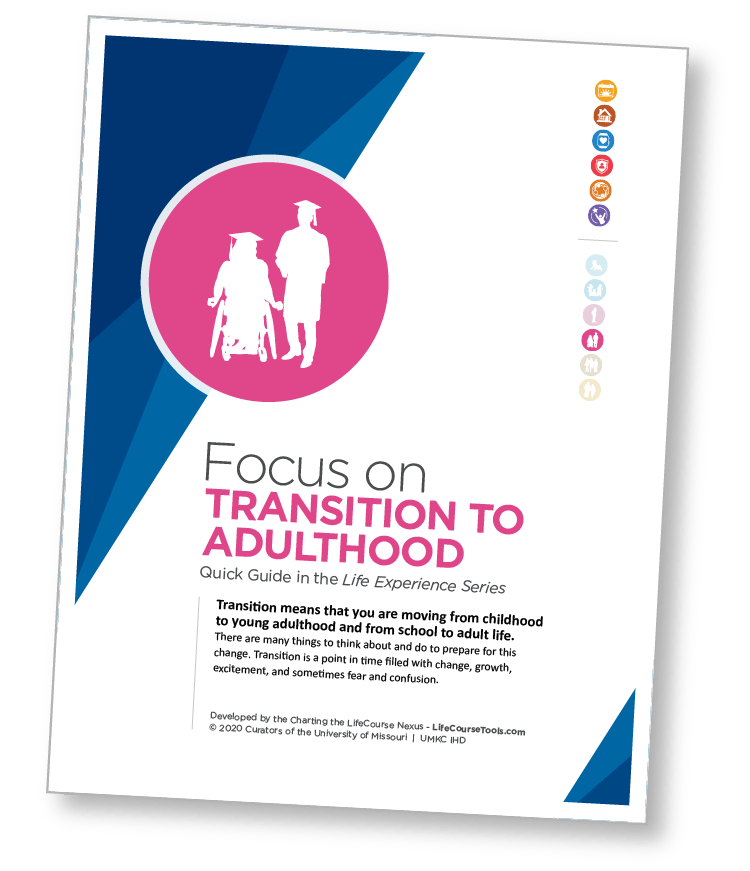
Use the Focus on Transition to Adulthood guide (PDF) developed by Charting the LifeCourse Nexus to identify and start exploring common questions with your child and their team as they prepare for adulthood.

[Add thumbnail image with the image box is working.]

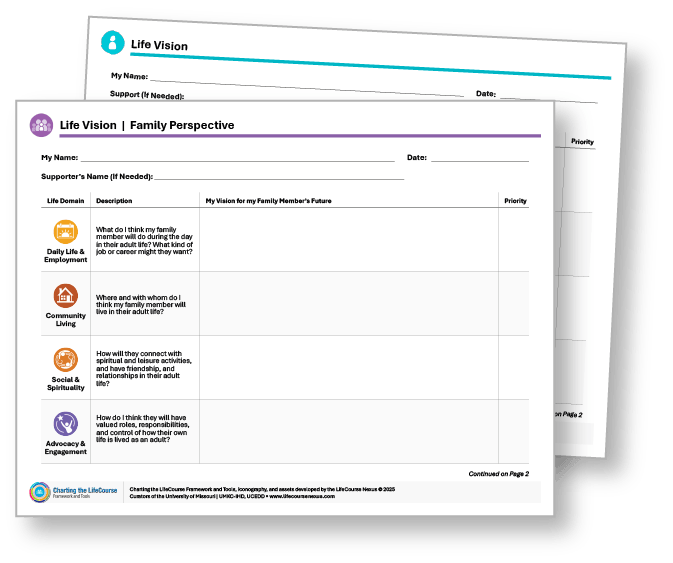
Use the Vision Tool (PDF) from Charting the LifeCourse Nexus to map out how you see your child's future. Share your version with your child, invite them to complete their own, and talk about both visions with their team.

[Add thumbnail when image box is working.]

Chat, call or email the Hub.

At the Hub, there’s no such thing as a wrong question. We're here to help. Contact us Monday to Friday, 8:30 am to 5 pm.