Skip to content

Navigate decision-making and legal options

The path to independence and self-determination requires many decisions. Be informed about decision-making and legal options so you can navigate the choices while respecting your child’s rights.

Decision making at 18 and beyond

At age 18, your child becomes a legal adult—regardless of ability. In Minnesota, this means that your 18-year-old will have the right to vote, marry, open a credit card, consent to medical treatments, make living arrangements and sign contracts. In addition, all educational rights will transfer to your child, and your child will have the right to choose when and how to share personal information.

Families are often told that they will no longer be able to participate in medical, education or social service conversations with providers once their child turns 18—and that the remedy is to seek guardianship. But your 18-year-old doesn’t need a guardian to continue to receive services, and you don’t need to be their guardian to be part of those conversations.

Ways to explore decision-making and legal options

You can explore all decision-making options with your child. Often there is no one-size-fits all approach.

Talk with your child about their goals, decision-making options (see section below) and potential ways to get there. Provide opportunities for your child to practice making decisions so they learn from real experiences and grow in self-assurance.

Decision-making options include:

  • Independent decision making 
    Independent decision making happens when a young adult makes choices on their own, without asking for input first. This can begin with simple choices, such as what to eat for breakfast or which movie to watch. For bigger decisions—such as whether to move out, take a new job or make a major purchase—your child may seek a second opinion or extra support. You can play an important role by offering guidance when needed while still promoting independence.

  • Supported decision making
    Supported decision making helps young adults make choices with help from people they trust, like family, friends, teachers or counselors. Whether decisions are small or large, support allows young adults to stay in charge while understanding their options and outcomes.

  • Guardianship 
    Guardianship is a legal arrangement where a court appoints someone (usually a parent or guardian) to make decisions for a young adult. This might include living arrangements, money management, or decisions about work, education or health care. Guardianship removes certain rights, so it should be considered only as a last resort. Whenever possible, it's better to provide guidance and support without taking away a young adults ability to make choices.

  • Conservatorship
    A conservator is someone the court appoints to help manage a person's money and finances if that person cannot make these decisions because of an injury, illness or disability.

See the videos below about supported decision making, guardianship and conservatorship to learn more.

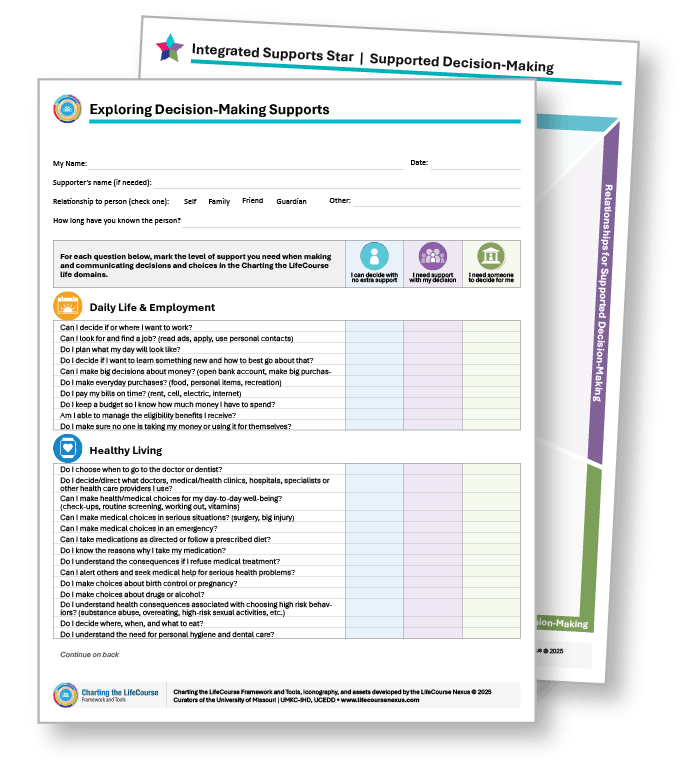
Charting the LifeCourse’s supported decision-making resources can help you explore areas where your youth might need decision-making support, plan for what it looks like and how it can happen, and find the needed supports.

For more guidance and answers to specific questions, call Minnesota’s Center for Excellence in Supported Decision Making Guardianship Information Line (952-945-4174). Social workers provide in-depth consults, advice and referrals to anyone, including people with disabilities and their families.

Understand more about decision-making options

Chat, call or email the Hub.

At the Hub, there’s no such thing as a wrong question. We're here to help. Contact us Monday to Friday, 8:30 am to 5 pm.